What Is an AI Cycling Coach?
An AI cycling coach uses machine learning to analyze your training data and create a continuously adapting plan. Instead of following a rigid schedule that doesn't account for fatigue, missed sessions, or life getting in the way, an AI coach recalculates your training after every ride. Want to understand how AI cycling coaching works under the hood? It's the middle ground between expensive human coaching and inflexible static plans. Our best AI cycling coach comparison breaks down the top options.
But not everything labelled "AI" is really coaching. Most adaptive training apps run rule-based algorithms over a fixed workout library. They can shuffle your week, but they can't reason about why. A true AI cycling coach uses a reasoning model that weighs your power data, wellness, subjective feel, life schedule, and goal event together, proposes changes with an explanation, and lets you approve them. That's what separates an AI cycling coach from an app that just automates a training template.
Power & Heart Rate
Ingests your FTP, power zones, heart rate zones, and ride-by-ride metrics to set the right intensity for every workout.
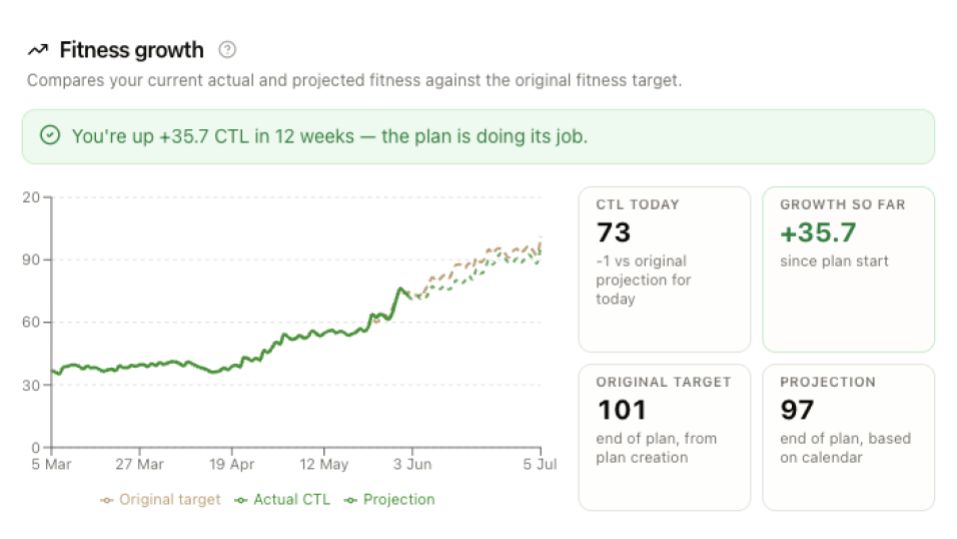
Training Load (CTL/ATL)
Tracks your chronic and acute training load to ensure progressive overload without overtraining or injury risk.
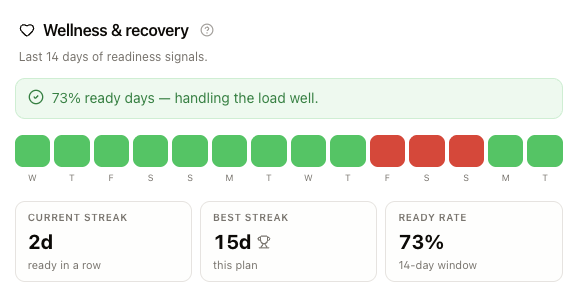
Wellness & Recovery
Factors in HRV, sleep quality, fatigue, and soreness to know when to push hard and when to back off.
Why "AI" Actually Matters in a Cycling Coach
"AI" gets slapped on almost every training app now. Under the hood, though, there are three very different things happening, and only one of them behaves like a real coach.
Rule-based auto-adjust
Most "smart" training apps run a fixed algorithm: if you complete X, push Y next; if you fail, back off. Fast and predictable, but blind to wellness, feel, and context. And it can't tell you why.
ML over a workout library
A step up: machine learning ranks and picks workouts from a preset catalogue. Better matching, but still a library. You don't see the reasoning behind its picks, and you can't argue with them.
Reasoning AI coach (LeCoach)
A reasoning LLM with full context of your plan, fitness history, wellness, and how you actually feel. Proposes changes with a written rationale, answers follow-up questions in chat, and only edits your plan when you accept.
How Adaptive Training Works
You ride
Complete a workout, indoors or outdoors. Your power, heart rate, and duration are recorded automatically via Intervals.icu or Garmin sync.
AI analyzes
LeCoach compares your executed workout against the prescribed targets. It scores compliance, identifies zone distribution, and updates your fitness model.
Plan proposes adjustments
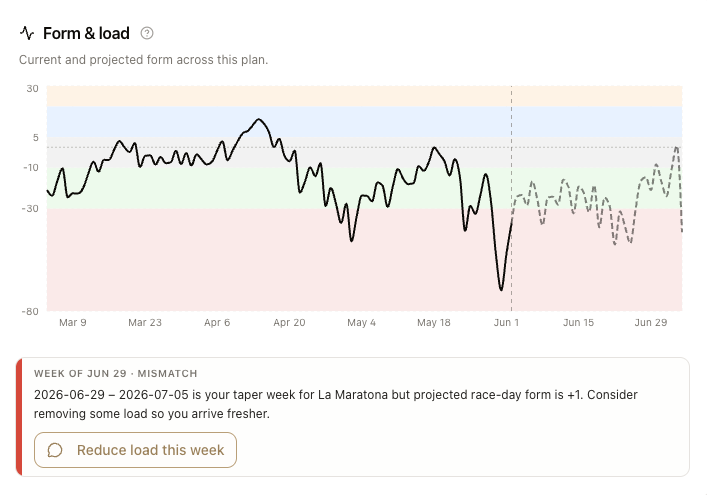
Upcoming workouts get suggested updates you can review. If you overperformed, intensity nudges up. If you're fatigued, the AI proposes swapping a hard session for recovery or shifting key workouts. You confirm before anything changes.
You get faster
Over weeks and months, this feedback loop compounds. Your plan stays aligned with your actual fitness, not where a spreadsheet assumed you'd be.
This is what we call structured-adaptive training: a periodized plan that flexes with reality, with you in the loop. See how it works across our cycling training plans.
AI Coach vs Human Coach vs Generic Training App vs Static Plans
Not sure which approach is right for you? Here's how the four main options stack up, including the black-box adaptive training apps that tell you what to ride but never why. For a detailed breakdown, read our AI cycling coach vs human coach comparison.
| Feature | AI Coach | Human Coach | Generic Training App | Static Plan |
|---|---|---|---|---|
| Monthly cost | €0–30 | €100–400+ | €10–20 | €0–50 one-time |
| Personalization | Full: adapts to your data and feel | Full: based on communication | Limited: picks from a fixed workout library | None: one-size-fits-all |
| Availability | 24/7 instant | Business hours, async | 24/7 app | Self-service |
| Adaptation speed | Proposes updates after every ride | Weekly check-ins | Adjusts silently after each ride | Never adapts |
| Data analysis depth | Power, HR, wellness, HRV, sleep, feel | Selective, time-limited | Power and completion only | None |
| Explains its decisions | Yes: reasoning per change | Yes: over the phone | No: black-box algorithm | No |
| Emotional support | Limited | Strong | None | None |
| Race tactics | General guidance | Expert, personalized | None | Generic tips |
| Scales with you | Scales as you confirm changes | Requires more coach time | Auto but opaque | Buy a new plan |
Generic training apps (think of the auto-adaptive workout apps that just tell you what to ride next) are the closest competitor to an AI cycling coach, but they're closer in interface than in philosophy. They pick workouts from a library; an AI coach reasons about you.
What an AI Cycling Coach Sees That a Generic Training App Misses
Adaptive training apps look at one signal: did you complete the workout at the prescribed power? A real AI cycling coach considers everything a human coach would, plus a few things they wouldn't have time for.
HRV trend
Not just today's reading. The 7-day trend against your baseline, so a single bad night doesn't derail the week.
Sleep quality
Duration, deep sleep, and consistency all factor into readiness for a hard session.
How you actually feel
Subjective RPE and a quick check-in beat any wearable when it comes to muscle soreness or mental fatigue.
Life context
A busy work week, travel, or a wedding on Saturday should reshape training, not be ignored.
Goal event timing
Peaking for your A-race means everything else (volume, intensity, taper) is scheduled backwards from that date.
Missed-session context
Missed a hard session yesterday? A coach knows whether to move it, redistribute it, or let it go. A generic app just skips it.
Cross-sport load
A big run or a hike loads your legs too. LeCoach counts it; most cycling apps don't even see it.
Its own reasoning
You can ask "why did you propose this?" and get a real answer, not a version-number changelog.
What Makes LeCoach Different
Conversational AI Interface
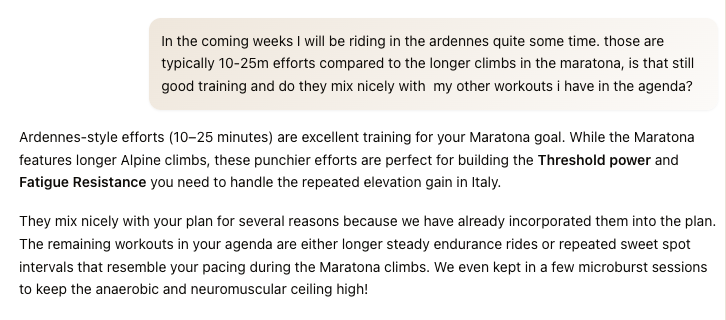
LeCoach isn't a black box that spits out workouts. You talk to it. Ask why a workout was prescribed, request changes to your schedule, or discuss race strategy, all in natural language. This makes LeCoach an ideal AI cycling coach for busy cyclists who need quick answers without scheduling calls with a human coach.
- Ask questions about your training in plain language
- Request plan modifications through chat
- Get explanations for every coaching decision
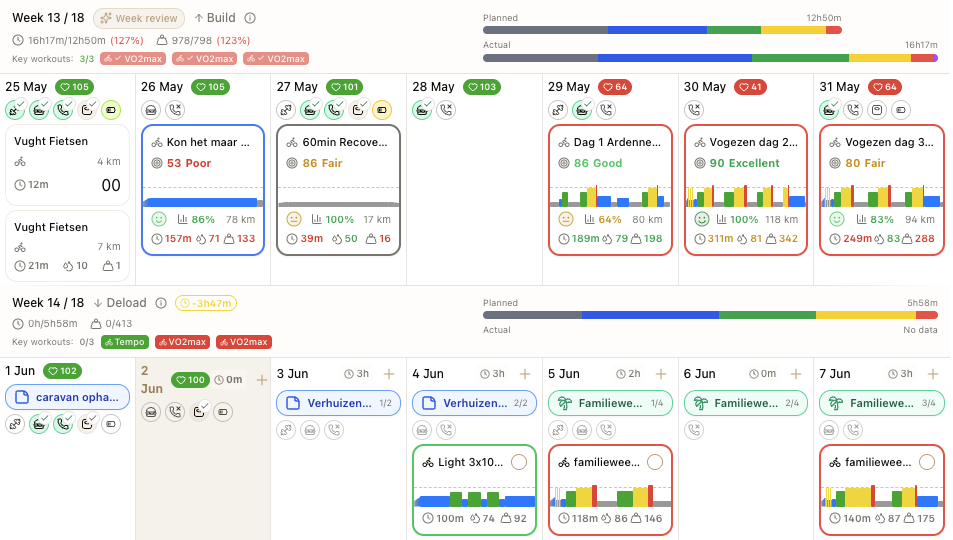
Deep Platform Integration
LeCoach connects directly with Intervals.icu, pulling in your activities, wellness data, and athlete profile automatically. If you already use Intervals.icu, our AI coaching for Intervals.icu users guide explains how the integration works. Workouts flow back to your calendar and sync to Garmin, Wahoo, or any connected head unit. No manual data entry required.
- Bi-directional Intervals.icu sync
- Automatic activity and wellness import
- Push workouts to your bike computer
Wellness-Aware Adjustments
Most training apps ignore how you feel. LeCoach factors in HRV trends, sleep quality, reported fatigue, and soreness to make daily decisions about your training. Bad night's sleep? The AI knows before you even open the app and adjusts accordingly. Every signal also rolls up into the LeCoach Plan Health Score, a single dashboard that grades your whole plan in real time.
- HRV and sleep-informed intensity proposals
- Daily wellness check-in with AI analysis
- Recovery-aware load reductions you can accept with one tap