Cycling Training Plans
Whether you're chasing a personal best with an FTP improvement plan, preparing for a gran fondo, or simply getting faster — a structured cycling training plan is the most effective way to improve. Learn how periodization, intensity distribution, and adaptive planning work together to transform your riding.
What Is a Cycling Training Plan?
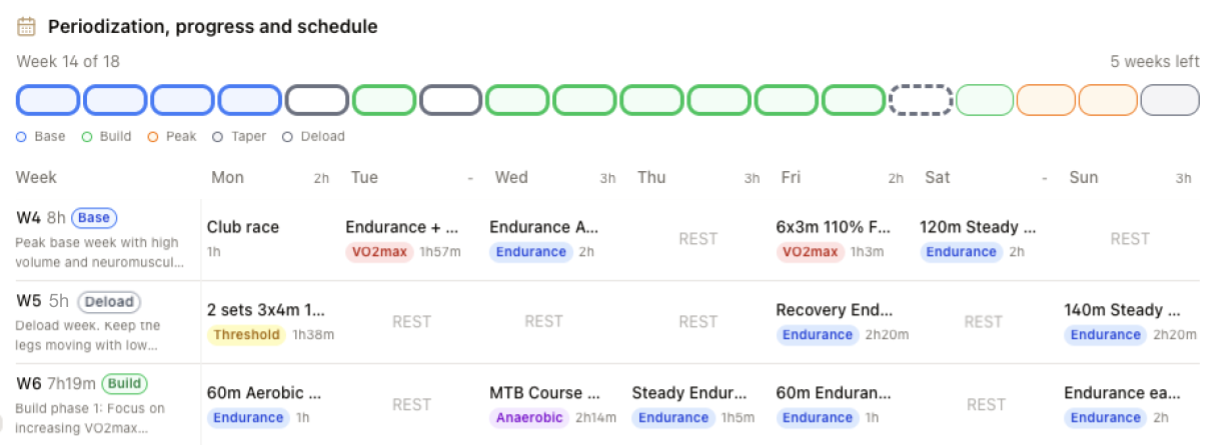
A cycling training plan is a structured program that organizes your workouts over weeks and months to systematically improve fitness. Unlike riding randomly, a plan applies progressive overload — gradually increasing training stress — combined with adequate recovery to drive physiological adaptation.
The foundation of effective training planning is periodization: dividing your training into distinct phases that each target different fitness qualities. This approach prevents plateaus, manages fatigue, and ensures you arrive at your goal event — or general fitness target — in peak condition.
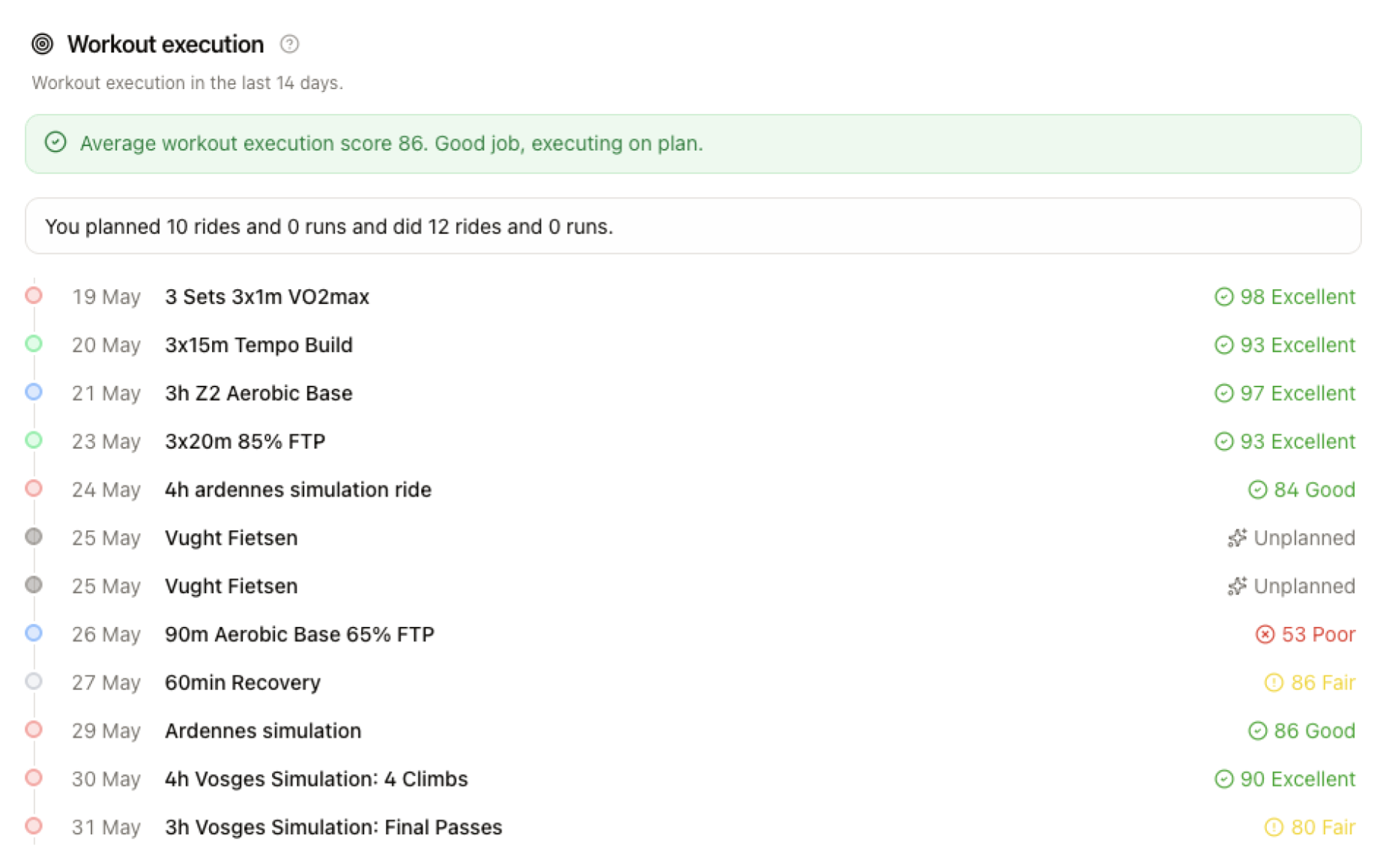
Modern training plans account for your available hours, current fitness (measured by metrics like FTP, CTL, and training load), wellness signals (sleep, HRV, fatigue), and specific goals. The most advanced plans — like those created by an AI cycling coach — propose adjustments in real time as your body responds to training, with you confirming the changes. See structured-adaptive training for the full picture.
Training Plan Phases Explained
Every well-designed cycling training plan moves through distinct phases. Understanding these phases helps you see why specific workouts appear at specific times — and why skipping the base phase is a common mistake.
Base Phase
4–8 weeks
Build aerobic foundation and muscular endurance. The majority of riding is done at low intensity (Zone 1–2), with gradual volume increases of 5–10% per week.
Key sessions: Long endurance rides, cadence drills, technique work
Build Phase
4–6 weeks
Introduce higher-intensity efforts to raise your FTP and lactate threshold. Volume stabilizes while intensity increases progressively.
Key sessions: Sweet spot intervals, tempo efforts, over-under workouts
Peak Phase
2–4 weeks
Sharpen race fitness with high-intensity, race-specific sessions. Volume decreases while intensity reaches its maximum.
Key sessions: VO2max intervals, race simulations, neuromuscular sprints
Taper Phase
1–2 weeks
Reduce training load to allow full physiological adaptation before an event. Volume drops 40–60% while maintaining brief high-intensity touches.
Key sessions: Short openers, active recovery rides, mental preparation
Recovery Phase
1 week
Scheduled de-load weeks that prevent overtraining and allow supercompensation. Typically placed every 3–4 weeks during build phases.
Key sessions: Easy spins, stretching, cross-training, complete rest days
Types of Cycling Training Plans
Not every rider needs the same plan. Your ideal training plan depends on your goals, available time, fitness level, and whether you're targeting a specific event. Here are the most common plan types — all of which LeCoach can generate as personalized training plans tailored to your unique profile.
General Fitness Plan
Designed for riders who want to get faster and fitter without targeting a specific event. Focuses on progressive overload, balanced intensity distribution, and sustainable volume growth over 8–16 weeks.
Event / Race Plan
Periodized backward from your A-race date. Includes base building, race-specific intensity, a taper phase, and recovery weeks timed to peak your fitness on race day.
FTP Improvement Plan
A focused 6–8 week block designed to raise your Functional Threshold Power through structured sweet spot, threshold, and over-under intervals with progressive overload. Learn more in our FTP improvement training plan guide.
Endurance Development Plan
Perfect for the off-season or early season. Builds aerobic capacity through high-volume, low-intensity riding with cadence work and muscular endurance sessions. Learn more in our endurance cycling training plan guide.
Time-Crunched Plan
Maximizes fitness gains in 5–8 hours per week using high-intensity interval training. Ideal for busy athletes who need efficient, structured sessions. Learn more in our time-crunched cycling training plan guide.
Gran Fondo / Century Plan
Builds the endurance and pacing skills needed for long-distance events (100+ km). Emphasizes progressive long ride extensions, fueling strategy practice, and climbing-specific work. Learn more in our gran fondo training plan guide.
Climbing Plan
Targets power-to-weight improvement for hilly events and mountain stages. Combines threshold work, sustained climbing intervals, and weight management strategies. Learn more in our climbing training plan guide.
Training Philosophies: Polarized vs Pyramidal vs Threshold
How you distribute training intensity across zones matters as much as total volume. The three dominant philosophies each have trade-offs — the right choice depends on your available hours, experience, and goals.
Polarized Training
80% easy / 20% hard
Most training time is spent at low intensity (Zone 1–2), with the remaining time at high intensity (Zone 4–5). Very little time in the "moderate" Zone 3. Backed by extensive research showing superior adaptations for endurance athletes.
Best for:
Experienced riders with 8+ hours/week, racing cyclists
Pros
- Research-backed for performance gains
- Reduces overtraining risk
- Maximizes aerobic adaptations
Considerations
- •Requires discipline to stay easy on easy days
- •Needs sufficient weekly volume
- •Hard sessions are genuinely hard
Pyramidal Training
75% easy / 15% moderate / 10% hard
Similar to polarized but includes more moderate-intensity (Zone 3 / tempo) work. Training volume decreases as intensity increases, forming a pyramid shape. The most common distribution among elite endurance athletes worldwide.
Best for:
Cyclists with 6–12 hours/week, gran fondo riders
Pros
- Natural progression from easy to hard
- Good balance of adaptations
- Flexible for various goals
Considerations
- •Risk of accumulating too much Zone 3 fatigue
- •Requires careful load monitoring
- •Less clear-cut than polarized
Threshold-Focused Training
50% easy / 40% moderate / 10% hard
Heavy emphasis on sweet spot and threshold work (88–105% of FTP). Provides rapid FTP gains in short timeframes. Popular in time-crunched training approaches where maximizing every hour matters.
Best for:
Time-crunched riders with 4–6 hours/week, FTP-focused goals
Pros
- Fastest FTP gains per hour invested
- Works well with limited time
- Clear, measurable progress
Considerations
- •Higher burnout risk over extended periods
- •Neglects top-end power
- •Can plateau after 8–12 weeks
Static vs Adaptive Training Plans
Traditional training plans are written once and never change. Adaptive training plans respond to how your body actually handles the training load — which is how real coaching works.
Static Plans
Written once based on initial inputs. Every workout is predetermined regardless of how you respond to training.
- •Fixed schedule — no adjustment for missed workouts
- •Ignores fatigue, illness, and life events
- •Same plan for everyone at a given "level"
- •Progress depends entirely on self-discipline
Adaptive Plans LeCoach
Structured backbone that proposes updates based on completed workouts, wellness data, and changing availability — you confirm the changes. Mimics how a human coach adjusts your plan week to week.
- Proposes load redistribution when workouts are missed
- Suggests intensity changes based on HRV and fatigue
- Personalized to your unique response patterns
- Evolves as your fitness changes
Example: 8-Week FTP Booster Plan
Here's what a structured 8-week FTP improvement training plan looks like in practice. This plan follows a pyramidal intensity distribution with a 3:1 load-to-recovery ratio and targets riders with 6–9 hours per week.
| Week | Block | Hours/Week | Key Sessions | Focus |
|---|---|---|---|---|
| 1 | Base | 6–7 | 2× Sweet Spot 2×15min, 1× Endurance 2.5h | Aerobic foundation, baseline testing |
| 2 | Base | 6.5–7.5 | 2× Sweet Spot 2×20min, 1× Tempo 1.5h | Volume progression, muscular endurance |
| 3 | Build | 7–8 | 2× Threshold 3×12min, 1× Over-Unders 4×8min | FTP stimulus begins |
| 4 | Recovery | 4–5 | 2× Easy rides, 1× Openers | De-load, supercompensation |
| 5 | Build | 7–8.5 | 2× Threshold 3×15min, 1× VO2max 5×4min | Threshold extension |
| 6 | Build | 7.5–9 | 2× Threshold 2×20min, 1× Over-Unders 5×8min | Peak threshold volume |
| 7 | Peak | 6–7 | 1× Threshold 2×20min, 1× VO2max 6×3min, 1× Race sim | Sharpen top-end, reduce volume |
| 8 | Taper/Test | 4–5 | Easy rides + FTP re-test | Recovery, measure gains |
Example Weekly Structure
A typical training week in a build phase balances high-intensity sessions, endurance rides, and rest. Here's how a ~7.5 hour week might look:
| Day | Workout | Duration | Zone | Notes |
|---|---|---|---|---|
| Monday | Rest Day | — | — | Full recovery |
| Tuesday | Threshold Intervals | 75 min | Zone 4 | 3×12min @ 95-100% FTP |
| Wednesday | Recovery Spin | 45 min | Zone 1 | Active recovery, easy cadence |
| Thursday | Sweet Spot | 90 min | Zone 3-4 | 2×20min @ 88-93% FTP |
| Friday | Rest Day | — | — | Full recovery |
| Saturday | VO2max Intervals | 70 min | Zone 5 | 5×4min @ 106-120% FTP |
| Sunday | Endurance Ride | 150 min | Zone 2 | Long aerobic ride, steady effort |
How LeCoach Builds Your Training Plan
LeCoach combines the structure of professional coaching methodology with the adaptability of AI. Here's how it works:
1. Tell LeCoach Your Goals
Chat naturally about your objectives, available hours, target events, and preferences. LeCoach asks the right follow-up questions to understand your situation — just like a human coach would in an intake session.
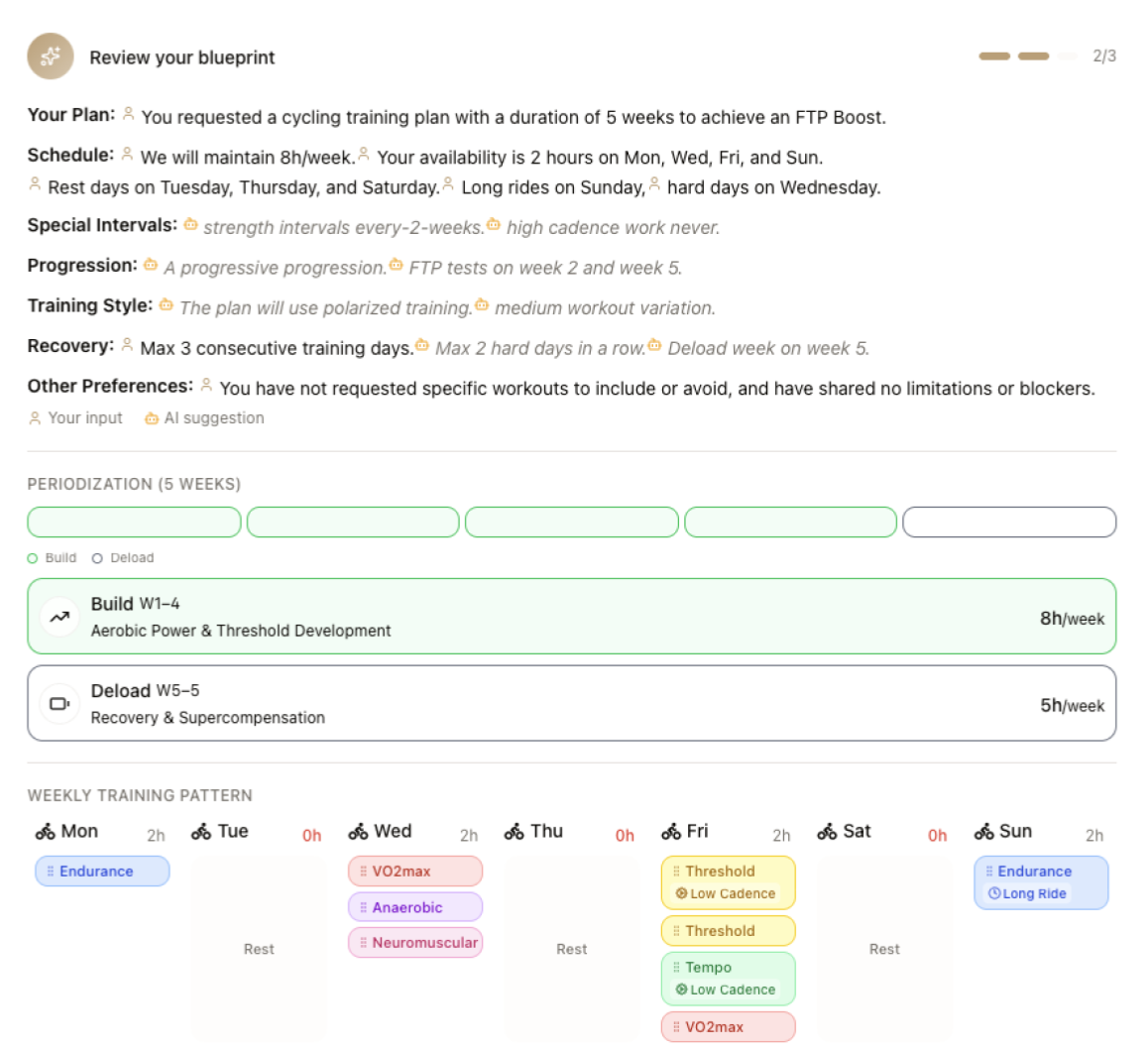
2. Review Your Blueprint
LeCoach generates a training blueprint showing your weekly pattern, phase progression, intensity distribution, and key sessions. Review and refine before committing.
3. Train and Adapt
Your plan lives on your calendar and syncs with Intervals.icu and Garmin. As you complete workouts, LeCoach monitors your progress, adjusts load, and evolves your plan — keeping you on track without rigid adherence.
Frequently Asked Questions
Ready to Build Your Training Plan?
Stop guessing and start training with structure. LeCoach creates a personalized, adaptive cycling training plan in minutes — and keeps it evolving as you get faster.
Start Free TrialExplore every cycling training plan guide
From event-specific plans to time-crunched and adaptive plans — pick the angle that matches your goal.
Cycling Training Plan
What a good cycling training plan looks like, week by week.
Read moreAdaptive Cycling Training Plan
Plans that adjust to your fitness, recovery and life.
Read morePersonalized Cycling Training Plan
Plans tailored to your athlete profile and constraints.
Read moreFTP Improvement Plan
Targeted block to raise your functional threshold power.
Read moreTime-Crunched Training Plan
Get fitter on limited hours per week.
Read moreGran Fondo Training Plan
Build the endurance and pacing for a long sportive.
Read moreClimbing Training Plan
Train for hilly events and sustained climbing power.
Read moreCentury Ride Training Plan
Prepare for your first or fastest 100-mile ride.
Read moreMountain Bike Training Plan
MTB-specific fitness, skills and event prep.
Read moreCyclocross Training Plan
Plan for a cyclocross season — power, repeatability, skills.
Read moreBeginner Cycling Training Plan
A first structured plan to build fitness and confidence.
Read moreMasters Cycling Training Plan
Smart training for cyclists 40+ focused on longevity.
Read more