Cycling Training
Everything you need to know about getting faster on the bike, from training fundamentals and periodization to weekly structure and progress tracking. A complete guide for cyclists at every level.
How Cycling Training Works
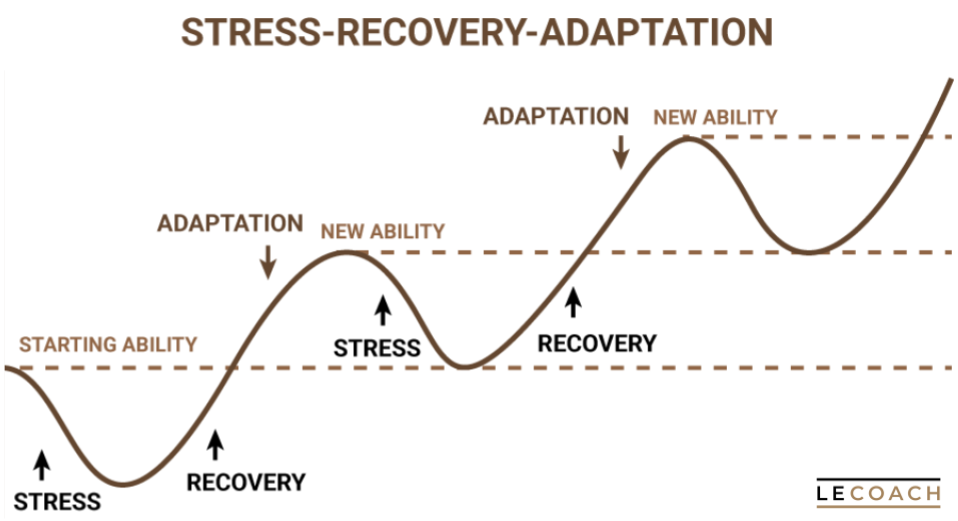
Cycling training follows a simple principle: stress, recover, adapt. When you ride hard enough to challenge your body, you create controlled physiological stress. During recovery, your body doesn't just return to its previous state. It rebuilds slightly stronger. This is called super-compensation, and it's how every fitness gain happens.
The difference between random riding and structured training is progressive overload: systematically increasing training stress over time so your body continually adapts. Without progression, fitness plateaus. Without recovery, fatigue accumulates. Effective training balances both: enough stress to trigger adaptation, enough rest to absorb it.
This is why structured cycling training consistently outperforms "just riding." A plan ensures each session has a purpose, each week builds on the last, and recovery is built in, not an afterthought. Whether you ride 5 hours a week or 20, the principles are the same.
The Three Pillars of Cycling Fitness
Every effective training program balances three fundamental elements. Neglecting any one of them limits your progress.
Endurance
Your aerobic engine: the ability to sustain effort over time. Built through consistent Zone 2 riding, it creates the mitochondrial density and capillary networks that power all higher-intensity work. Without endurance, everything else has a low ceiling.
Intensity
The stimulus that drives specific adaptations: threshold work raises your FTP, VO2max intervals expand your aerobic ceiling, and sprint efforts develop neuromuscular power. Intensity produces the biggest performance gains, but only when built on an endurance foundation.
Recovery
Where fitness is actually built. Training creates the stimulus; recovery creates the adaptation. Sleep, nutrition, rest days, and recovery weeks are not optional extras. They're when your body adapts and gets stronger. Skipping recovery is the single most common training mistake.
Training Intensity and Zones
Training zones are intensity buckets that categorize effort based on your Functional Threshold Power (FTP) or heart rate. They exist because different intensities produce different physiological adaptations: easy riding builds aerobic capacity, threshold work raises your FTP, and high-intensity intervals expand your VO2max.
LeCoach uses a 7-zone power model ranging from Active Recovery (Zone 1) through Neuromuscular (Zone 7). Each zone targets specific energy systems and produces distinct training effects. Understanding zones transforms your training from "riding hard" to strategically developing the fitness qualities that matter most for your goals. Our complete guide to cycling training zones breaks down each zone, its physiological targets, and how to identify them using power, heart rate, or perceived exertion.
The most common mistake in zone-based training is spending too much time in "no man's land" (Zone 3 tempo), which is too hard for recovery but too easy for significant threshold adaptation. Effective training is polarized: mostly easy (Zone 1–2), with targeted hard efforts (Zone 4+).
Periodization: The Five Phases of Training
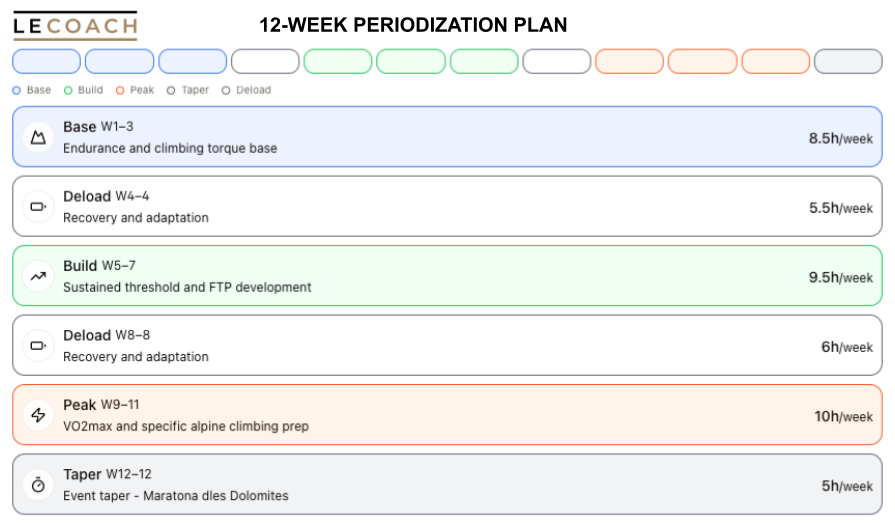
Periodization divides your season into distinct phases, each with a specific focus. This prevents plateaus, manages fatigue, and ensures you peak at the right time. Understanding the base, build, peak, and taper cycle gives your season a clear progression arc from aerobic foundation to race-day sharpness.
Base Phase
8–12 weeksBuild aerobic foundation, fat oxidation, and mitochondrial density. High-volume, low-intensity riding is the engine that powers everything else.
Focus: Zone 2 endurance rides, long steady efforts, building weekly volume gradually
Build Phase
6–8 weeksAdd intensity on top of your aerobic base. Threshold and VO2max intervals raise your FTP ceiling and lactate clearance.
Focus: Threshold intervals, sweet spot work, VO2max sessions, maintaining endurance volume
Peak Phase
2–4 weeksSharpen race fitness with race-specific intensity. Volume drops, intensity stays high, specificity increases.
Focus: Race-pace intervals, openers, high-intensity repeats, event simulation
Taper Phase
1–2 weeksShed accumulated fatigue while maintaining sharpness. Reduced volume with short, intense openers to arrive fresh on race day.
Focus: Reduced volume (40–60%), short high-intensity openers, rest and recovery
Recovery Phase
1–2 weeksFull physical and mental recovery after a training block or event. Unstructured easy riding or complete rest.
Focus: Easy spins, cross-training, active recovery, mental reset
Progressive Overload: The Engine of Improvement
Progressive overload is the foundational principle behind all training adaptation: gradually increase training stress over time so your body is continually forced to adapt. Without it, fitness plateaus, no matter how many hours you ride.
In cycling, overload can come from increasing ride duration, adding intensity (higher power intervals), increasing training frequency, or reducing recovery within intervals. What matters is that the increase is systematic and gradual: typically 5–10% per week for 3 weeks, followed by a recovery week where load drops 40–50%.
This creates a repeating cycle: stress → recover → adapt → increase stress. Each cycle leaves you slightly fitter than the last. Rush the progression and you risk overtraining; neglect it and you stagnate. A well-designed plan manages this balance automatically, ensuring every week builds on the previous one while respecting your body's need to absorb the training.
How to Structure Your Training Week
A well-structured week follows the hard-easy principle: alternate high-intensity sessions with recovery or easy endurance rides. This ensures adequate recovery between key sessions while maintaining training volume. Our guide on how to structure cycling training covers weekly design patterns in detail.
Most cyclists benefit from 2–3 key sessions per week (intervals, threshold work, or long rides) with easy rides or rest days between them. The weekend typically accommodates the longest ride of the week. Here's an example build-phase week for a cyclist training 10–12 hours:
| Day | Session | Zone | Duration | Purpose |
|---|---|---|---|---|
| Monday | Rest Day | - | - | Full recovery |
| Tuesday | VO2max Intervals | Z5 | 75 min | 5×4min at 106–120% FTP with 4min recovery |
| Wednesday | Endurance Ride | Z2 | 90 min | Aerobic maintenance, active recovery from intervals |
| Thursday | Threshold Intervals | Z4 | 80 min | 2×20min at 95–105% FTP, build FTP |
| Friday | Rest or Easy Spin | Z1 | 0–45 min | Recovery before weekend volume |
| Saturday | Long Endurance Ride | Z2 | 3–4 hours | Aerobic base building, fat oxidation |
| Sunday | Tempo Ride | Z3 | 2 hours | Moderate effort, muscular endurance |
Training for Time-Crunched Cyclists
Not everyone has 15 hours a week to train. The good news: meaningful fitness gains are achievable with 5–8 hours per week if those hours are spent wisely. Time-crunched cycling training is about ruthless prioritization: making every session count when your schedule is tight.
The key principles for limited-time training:
Prioritize key sessions
Two quality interval sessions per week drive more adaptation than five mediocre rides.
Sweet spot training
88–94% FTP gives the best return on time invested: high training stimulus with manageable fatigue.
Make easy rides truly easy
When time is limited, recovery rides should be genuinely easy (Zone 1) so you're fresh for hard sessions.
One longer weekend ride
Even 2–3 hours once a week maintains your aerobic base and mental resilience for longer events.
Indoor vs Outdoor Cycling Training
Indoor and outdoor cycling training each offer distinct advantages, and the most effective programs leverage both. Indoor training on a smart trainer excels at structured interval work. Consistent power targets, no traffic interruptions, and precise zone control make it ideal for threshold, VO2max, and sweet spot sessions.
Outdoor riding develops bike handling, group riding skills, and the ability to produce power in real-world conditions like wind, terrain changes, and variable pacing. Long endurance rides are generally more enjoyable outdoors, which matters for consistency over months of training.
Many cyclists use a hybrid approach: structured intervals indoors during the week when time is limited, and longer endurance or group rides outdoors on weekends. Climate, schedule, and training phase all influence the optimal indoor/outdoor mix.
Polarized Training for Endurance Performance
Polarized training is an intensity distribution model where approximately 80% of training time is spent at low intensity (Zone 1–2) and 20% at high intensity (Zone 4+), with minimal time in the moderate "grey zone" (Zone 3). Research consistently shows this distribution produces superior endurance adaptations compared to threshold-heavy approaches.
The logic is straightforward: easy rides build aerobic capacity without accumulating significant fatigue, while hard intervals create the high-intensity stimulus needed for VO2max and threshold gains. Zone 3 tempo is the worst of both worlds: too hard to recover from quickly, too easy to drive meaningful high-end adaptation.
Polarized training has become a cornerstone of modern endurance coaching, used by elite cyclists, runners, and cross-country skiers. For time-crunched athletes, a modified polarized approach with sweet spot work can be effective, but the principle of avoiding the grey zone remains valid at every level.
Structured vs Unstructured Training
Why does a plan matter? Here's how structured training compares to simply riding without a plan.
| Aspect | Structured Training | Unstructured Riding |
|---|---|---|
| Progression | Systematic weekly load increases with planned recovery | Random: some weeks hard, some easy, no pattern |
| Recovery | Built-in recovery weeks every 3–4 weeks | Only when exhaustion forces it |
| Zone Targeting | Each session targets specific energy systems | Most rides in "no man's land" (Zone 3) |
| Periodization | Base → Build → Peak → Taper phases | Same approach year-round |
| Time to Results | Measurable FTP gains in 6–8 weeks | Plateau after initial gains |
| Injury Risk | Managed through load monitoring | Higher, from overuse and unmanaged volume spikes |
| Motivation | Clear goals and visible progress | Often stagnates without direction |
Common Training Mistakes
Even experienced cyclists fall into these traps. Recognizing them is the first step to faster, more sustainable progress.
Skipping the Base Phase
Jumping straight into high-intensity work without aerobic foundation leads to plateaus and burnout. The base phase isn't glamorous, but it's where lasting fitness is built.
Too Much Intensity
Going hard every ride prevents recovery and limits adaptation. Research shows 80% of training time should be easy (Zone 1–2), with only 20% at high intensity.
No Recovery Weeks
Training stress accumulates over weeks. Without planned recovery weeks every 3–4 weeks, fatigue builds faster than fitness, a recipe for overtraining.
No Structured Plan
Random riding produces random results. A structured plan ensures progressive overload, appropriate recovery, and targeted development of your specific limiters.
Ignoring Training Zones
Riding in "no man's land" (Zone 3) too often: too hard for recovery, too easy for adaptation. Zone discipline ensures each session serves a specific purpose.
Not Tracking Progress
Without measuring FTP, training load, or performance trends, you're guessing. Data reveals what's working, what's not, and when to adjust your approach.
Tracking Progress and Key Metrics
What gets measured gets managed. These metrics help you understand whether your training is working, and when to adjust.
FTP (Functional Threshold Power)
TSS (Training Stress Score)
CTL / ATL / TSB (Fitness / Fatigue / Form)
HRV (Heart Rate Variability)
How LeCoach Helps You Train Smarter
LeCoach applies all these training principles automatically through AI-powered coaching. It builds periodized training plans tailored to your FTP, available time, and goals, then adapts them based on how your body responds.
AI-generated training plans with proper periodization and progressive overload
Zone-targeted workouts that develop the right energy systems at the right time
Automatic zone time tracking and workout compliance scoring
Wellness-aware adjustments that adapt your plan based on recovery, sleep, and readiness
Syncs with Intervals.icu for seamless data integration and analysis
Time-crunched optimization that maximizes training effect for your available hours
Frequently Asked Questions
Ready to Train with Purpose?
Stop guessing and start progressing. LeCoach builds your personalized training plan and adapts it as you improve.
Start Free TrialExplore every cycling training guide
Periodization, progressive overload, indoor vs outdoor, and the training philosophies that hold a season together.
How to Structure Cycling Training
Turn random rides into a coherent training week.
Read moreBase, Build, Peak, Taper
The classic four-phase season model explained.
Read morePeriodization for Cyclists
How to plan blocks, weeks and recovery across a year.
Read moreProgressive Overload
Apply progressive overload without overcooking yourself.
Read morePolarized Training
Mostly easy, occasionally very hard — what the model means.
Read moreTime-Crunched Cycling Training
High-quality training when hours are scarce.
Read moreIndoor vs Outdoor Training
When to ride indoors vs outside and how to blend both.
Read more